
Playing With the Boys
A Lesson on Internalized Misogyny

Lately, our four-year-old’s favorite questions always end in “when you were a kid.” Did you play with blocks when you were a kid? Did you watch The Lion King when you were a kid? Did you eat blueberry muffins when you were a kid? On and on and on.
But even without those questions, having kids does tend to make us reflect back on our childhood more often. It’s interesting for me to think back on certain memories with new perspective and language that I didn’t have in those moments (and even perspective/language that I didn’t have just a few years ago).
There is one thing in particular that I remembered recently. It’s not a single memory, it’s something my dad used to say all the time.

For context, I’ve been playing golf since I was about five years old. My dad loves golf, so of course, he taught my brother and me how to play. It was something we did all the time. I was better than the average girl my age, but mostly because so few girls in my area played at all. (If your eyes glazed over at the word golf, please stay with me for a moment.)
When I was in high school, a girl named Michelle Wie qualified to play on the PGA Tour. At the time, she was only fifteen years old. But what was amazing to me (and most people) wasn’t just her age, it was that she did something almost no female golfer ever did. She played with the men.
We used to watch golf together on the weekends, and more than once, my dad would say, “If you practice and work hard, you could play on the LPGA one day.” (L for Ladies.)
But sometimes, he would add this: “Maybe you could even play on the PGA Tour like Michelle Wie.”
There are two ideas wrapped up in that sentence. As I get older, I’ve had to learn how to throw out one of them but keep the other.
The one I kept is that I have a dad with so much confidence in me that he thought, if I worked hard enough, I could achieve something very difficult and perform at the highest level. And partly because I have parents who built that confidence in me, I also believe that.
But the idea I had to unlearn is that playing with the boys is better than playing with the girls. That men’s sports are better than women’s sports. Because that was the implication. It would be amazing if you made it to the LPGA (for women), but it would be even better if you made it to the PGA (for men). That’s misogyny.
And when you hear it from not only your dad, but society at large, it gets internalized. For years, I did believe that competing with boys was better than competing with girls. Instead of comparing myself to other people my age or in my circumstances (or throwing out the comparison game altogether), I compared myself to boys and men as the standard I should be striving for. That’s internalized misogyny.
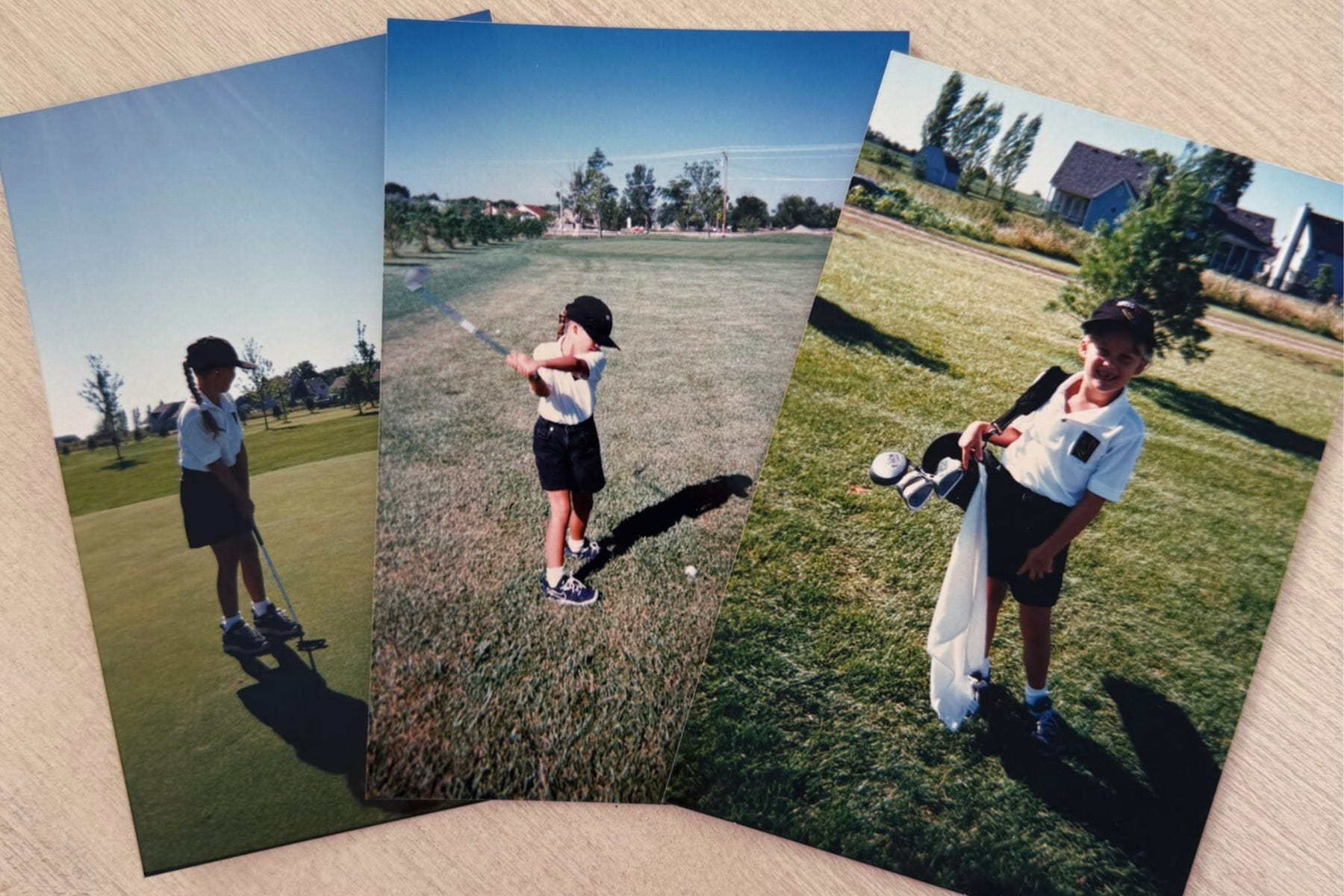
If you’re thinking, “but men do tend to be better at sports,” that may be true. But only for sports that were invented by men. And yes, almost all sports were invented by men, but also for men.
There are very few sports invented by women, but the most popular one is acrobatic gymnastics, and even that is a variation of a sport invented by a man. However, men’s acrobatic gymnastics is actually different from women’s acrobatic gymnastics because it was adapted to focus more on upper body strength and power. Interesting, right? When a woman invented a sport, a modified version of it was created, changing the sport to fit men’s strengths in order for them to compete in it.
It happens with sports, where men invent the thing with men in mind, then women find themselves trying to adapt and compete in something that was designed for men. But that’s also exactly what happened with our entire society. Men formed the government and decided who could participate. Men formed the economic systems that shape our lives. Men formed the laws and legal system that we’re all subjected to. I could keep going, but you get the picture.
The Takeaway
Equality isn’t about women being able to compete in a sport or a world designed by men. It’s living in a world that was designed with everyone in mind. So, as I think back on my childhood and try to raise my boys to value equality, I want to be more careful about assigning value to things and creating a hierarchy around things that were only designed for half of the population.